Fresh Carrots

Fresh Carrots

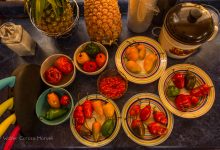
Cuzco’s cuisine inherits a wide range of dishes with flavors that have developed over thousands of years. Thanks to the ample production of foods our Earth Mother offers us we are fortunate to possess a great variety of ingredients, vegetables, grains, and fruits, which allow us to make our distinguished traditional dishes.

Our markets hold the best products. To walk through them is fascinating.They are a museum of food and enclose history and stories that only our caseras, vendors, disclose. Read the rest of this entry

Finishing a Roof

Finishing a Roof

By Arnold Fernandez Coraza (translated by David Knowlton)

The city of Cuzco keeps growing and, as a result, its hillsides are filling up with houses. When a house is built, our customs and traditions require the family members and friends of the owners get together to help the workmen perform the roofing. They do this as a kind of ayni, mutual assistance. When they put the last touches on the roof they prepare special dishes and drinks to celebrate the roofing, or techado as we call it. Read the rest of this entry

A Meal of Guinea Pig

A Meal of Guinea Pig

By Brayan Coraza Morveli with the help of Walter Coraza Morveli (translated by David Knowlton)

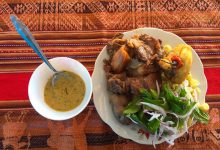
In Cuzco people love guinea pig. Not only is it a common animal kept in the house, it is also provides meat for Cuzco’s favorite dishes, and it has all kinds of stories and customs around it. Though many tourists may find it strange to eat guinea pig, or cuy as we call it, the people of Cuzco find it a delicacy and expect in on special occasions. Read the rest of this entry

Cuzco’s Sicuani, Nieto’s Small Fatherland

Sicuani, River and Mountains (http://sicuanimividaerestu.blogspot.com/ 2009/06/fotos-de-sicuani.html)

Sicuani, River and Mountains (http://sicuanimividaerestu. blogspot.com/ 2009/06/fotos-de-sicuani.html)

Though he lived other places, the poet Luís Nieto Miranda´s life was marked by Sicuani, a major provincial city of the Department of Cuzco. Located up the Vilcanota river from the Sacred Valley, it is the last major stretch of broad flat valley before the river rises to it origins in the high mountains and in the hot springs just below the pass of La Raya, which in turn opens into the high plateau and the Titicaca basin. Read the rest of this entry

Tourists and Wachuma in the Market

Tourists and Wachuma in the Market

By Fernando Delgado Aguirre (translated by David Knowlton)

April is the month of the earth and all the planet take a pause in their daily lives to salute the earth. In the Andes we know her as the Mama Pacha, the Mother Earth. And, from this space we take a pause to speak of the Andean world view and of the Apu Wachuma, the Lord Wachuma based on the recent presentation by Lic. Victor Estrada Cervantes* in the Municipal LIbrary of Cuzco as part of the Martes Culturales, or Cultural Tuesdays, held every week at seven pm. Read the rest of this entry

Representation of Q'eswachaka Bridge, Museo Inca, CuscO

Representation of Q’eswachaka Bridge, Museo Inca, Cusco

By Fidelus Coraza Morveli (Translated by David Knowlton)

Considered by locals “The Incan Bridge”, Q’eswachaca is one of the hanging bridges of the great road system that once tied the Inca Empire together. While, after the Spanish invasion, most of those bridges disappeared, this bridge continues and is continually kept up thanks to the ability and knowledge of local residents, skills and knowledge they inherited from our ancestors. The well-trained villagers renew the bridge every year. Thanks to their commitment, the bridge has not disappeared but continues in use. Read the rest of this entry

It's Time for a Loche

It’s Time for a Lonche

By David Knowlton with help of Walter Coraza Morveli

English words, like strange ghosts, often appear in the midst of Spanish sentences in Cuzco. Some of them, like “men”, or “brother” are stylish and of the moment. Others seem to have been there for a long time and, like ghosts, have stories, sometimes hidden ones. The word lunch is one of these last ones. It has been around long enough to adapt to its new surrounding, yet not long enough to lose its English touch. Read the rest of this entry

Loquat, a Delicious Treat in Cuzco

Enjoy the Loquat Fruit on Its Different Desserts

Enjoy the Loquat Fruit on Its Different Desserts

By Arnold Fernandez Coraza (translated by David Knowlton)

As long as the rains keep falling the fruit trees continue to produce. An example is the loquat. It is a small and round fruit with a very agreeable scent and refreshing flavor. It has a thin, yellowish peel. It is used in both sauces and desserts. Read the rest of this entry

A Visit to the Sanctuary of Lord of Huanca

A Friend Getting Cleansed with Candles in Huanca's Chapel of Candles

A Friend Getting Cleansed with Candles in Huanca’s Chapel of Candles

By Walter Coraza Morveli (translation by David Knowlton)

Two weeks ago my friends and I made a trip through the Sacred Valley of the Incas. The valley, as always, was stunning in its majesty, a deep cap in the heart of the mountains with a gleaming river below, the Wilcamayo (Holy River). The mountains seem like arms that reach around and sustain this important valley with its mild climate and filled with irrigated fields seeming like a mosaic of gems. Read the rest of this entry

A Mint Like Peruvian Herb, Muña

Muña Tea

Muña Tea

By Brayan Coraza Morveli (translated by David Knowlton)

The cold of Peru’s highlands is like a living presence. It plays important roles in life in the highlands. Our ancestors used it like a natural refrigerator to preserve food in large quantities. Products such as potatoes, corn, and meat were transformed by the cold to last for a long time and help sustain life. However there are also healing plants that come from the cold lands. Read the rest of this entry

 Page 3 of 58 « 1  2  3  4  5 » ...  Last »